How Perverse Subsidies Increase Hunger and Poverty
The Ways of Wealth and Power
Subsidies and tax breaks are two strategies that a society uses to pool its resources to promote a desired result. Ideally, it subsidizes the industries, like the making of wind turbines and electric cars, that are deemed beneficial to society, and it can punitively tax behaviors, like smoking tobacco and polluting the air, that cause harm. Those countries (mainly China, EU members, Japan, and the U.S.) that have generously subsidized renewable energy have the world’s largest solar, wind, and biofuel energy portfolios. And those, like Germany, Japan, Canada, and the U.S., that have enforced strict carbon dioxide emissions laws have the cleanest air and water.
To distinguish from these sorts of salubrious subsidies, environmentalists speak of “perverse subsidies,” that is, those corporate giveaways that are detrimental to a society’s interest. Worldwide, approximately $25 billion goes to the fishing industry, $14 billion to the logging industries, over $400 billion to the fossil fuel industries, and over $550 billion to farmers—each and every year. The thirty-seven OCED countries—basically the industrialized First World nations—pay their farmers more than $350 billion annually, about a billion dollars a day, much of it to not grow food. And China subsidizes its farmers far north of $200 billion a year. For their perverse investments, American agribusinesses net a thousand-fold return from subsidies and tax breaks, alone.
The bilking is actually far worse than this. In their book Perverse Subsidies, Norman Myers and Jennifer Kent suggest that U.S. corporations, alone, suck $2.6 trillion from the government teat every year in subsidies and externalities. And a 2016 International Monetary Fund (IMF) working paper found that when externalities are included in the cost of subsidies, fossil fuel subsidies around the world totaled some $5.3 trillion. Given industrial agriculture’s outsized impact on the environment, its subsidies—when defined in this more inclusive way—may well exceed even those of fossil fuels. Big business has hijacked a strategy meant to benefit society.
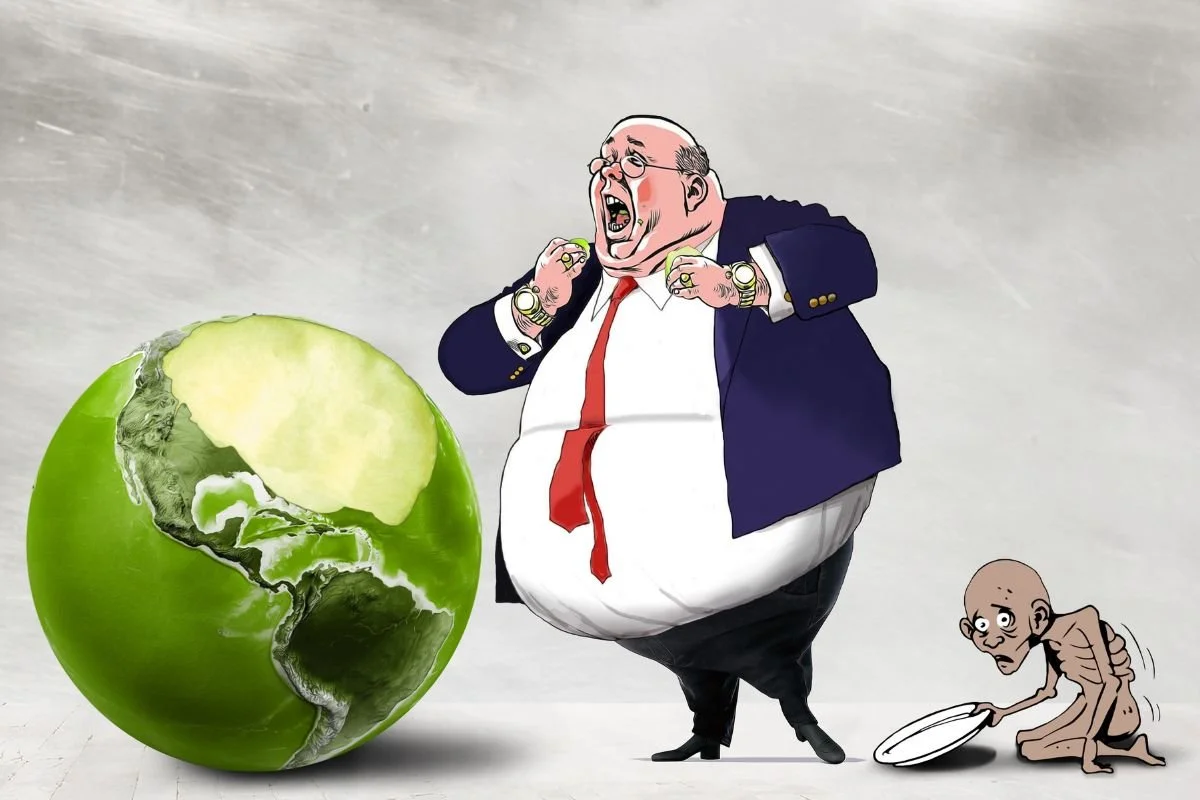
Perverse subsidies benefit big businesses, not the farmers or the consumers who most need assistance. At one end of the spectrum, the top ten percent of the recipients in the U.S. take 77 percent of the ag subsidies. And, just as a punctuation mark on this institutional inequality, it was discovered by EWR, a non-partisan environmental organization, that fifty billionaires whose collective net wealth was $331.4 billion were among those who received federal subsidies for their crops. The large majority of America’s 2.1 million farms do not receive government assistance and are therefore at a competitive disadvantage. Many of them do not even net a profit from the market value of their produce. To make a living, these farmers must rely on income from working second and third jobs off their farms. And, as for the investments needed to help the poorest American feed themselves, several analysts have arrived at the same conclusion: it would cost far less than the exorbitant handouts to the rich, four to thirty times less, according to various estimates.
Perverse subsidies hide the gross flaws of a dysfunctional agricultural system. Subsidies for Chinese, European, and the big American farms now constitute a substantial portion of their income. The only way that these farmers can remain “competitive” with other subsidized farmers on the world market is… to be subsidized. Taxpayer money in the form of subsidies and tax breaks allow these farmers to sell their crops below cost, undercutting both their national compatriots and the farmers in the Global South whose countries cannot afford to subsidize their farmers. By depressing the price of food, subsidies in the Global North serve to further cripple—if not completely destroy—the small local farmers who are the main source of nutrition for billions of people around the world. In response to this and the many economic and climatic stressors, farmers worldwide are leaving their smallholder farms in droves. From India, Iran, and South Africa to Bulgaria, Latvia, and Spain to Guatemala, Honduras, and El Salvador, farmers are reluctantly abandoning the lands and livelihoods of generations of their forebears, often moving to cities that are already overcrowded and overwhelmed.
Perverse subsidies hurt the poor and the poorest most. There are at least 235 million people in sub-Saharan Africa who are chronically hungry, and another sixteen million in North Africa. Yet, by providing generous subsidies to their farmers and imposing tariffs and food quality laws against competing imports, wealthy countries continue their centuries of “sowing misery” on the African continent. Although European agriculture is the world’s most expensive, EU farm subsidies make it cheaper for Africans to import food grown in Europe than to grow their own. Sixty percent of all sub-Saharan Africans work on the land as smallholder farmers, yet eighty percent of the food eaten in their communities comes from outside Africa. Absent a fair market price, African farmers cannot compete with European products, and African agriculture remains stuck in its vicious poverty cycle.
In these ways, perverse subsidies perpetuate poverty and world hunger. Not only does the big-business model of agriculture destroy and deplete precious land, water, and energy resources, diminish wild and domesticated biodiversity, diminish the quality and variety of foods people eat—that is, it doesn’t make environmental and health sense—but it doesn’t even make economic sense.
Perverse subsidies discourage healthy diets. Almost all U.S. government agricultural subsidies go to growers of corn, cotton, wheat, rice, and soybeans, most of which goes to animal feed, highly processed foods, and fuel for transportation. It subsidizes sugar as much as it does all the country’s vegetables and fruit crops combined, which the USDA officially categorizes as “specialty crops.” It cannot be lost on anyone that the U.S. has a raging obesity epidemic fed principally on sugar, corn sweeteners, and bowls of processed grain products. Forty-two percent of its adults and nearly twenty percent of its children and adolescents are obese, according to the CDC. Not just overweight, obese. Conspicuously, the $1.5 billion in sugar subsidies represent over 64 percent of the sugar industry’s total earnings. Given the approximately twenty million dollars that the sugar industry spends annually on campaign contributions and lobbying, these perverse investments net them more than a seventy-fold return.
For all these reasons, subsidies—like all externalities—function as a massive upward redistribution of wealth.
So, why know this? Because awareness is the first step towards a better world.