The Problem with ‘Business as Usual’
Why Our Technological Fixes Aren’t Enough
When pushed into a corner by the overwhelming weight of opposing facts, the last refuge of the Cornucopian is (no, not patriotism, that’s “the last refuge of a scoundrel,” according to the poet Ben Johnson, but…) technology.
And to be fair, our species’ extraordinary success is due in no small measure to our technological ingenuity. Electricity, refrigeration, automobiles, railroads, aviation, computers, smartphones, solar cells, vaccines, sanitation systems, pain relievers, and minimally invasive surgery have enabled longer lives lived with unprecedented comfort. Technological innovation has softened the impacts of population growth and rising consumption by improving energy efficiency, increasing crop yields, discovering substitute materials, and advancing architectural and industrial design.
Still – at the risk of being today’s cold shower – technology is a double‑edged sword. Alongside its undeniable benefits have come unintended consequences that often amplify, rather than diminish, humanity’s impact on the Earth.
Consider efficiency. Improvements in efficiency reduce the cost of energy (derived from coal and solar) and of the products that energy enables, from steel in skyscrapers to rare‑earth minerals in cell phones. Lower costs make these goods accessible to more people, which in turn encourages industry to produce more of them. The result is not conservation, but extravagance and waste. This dynamic is known as the Rebound Effect or Jevons’ Paradox. Gains in efficiency lead not to reduced consumption, but to greater total use.
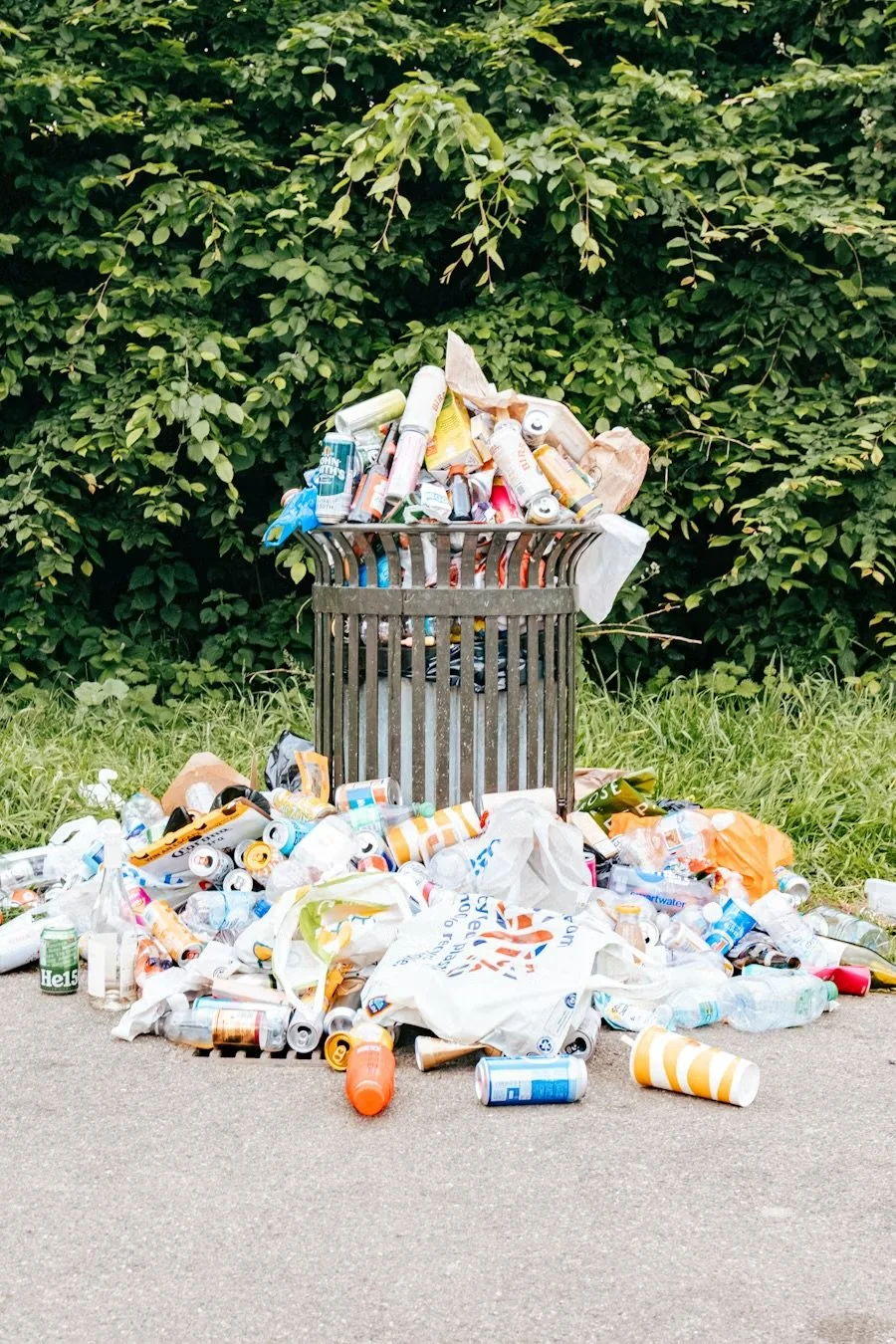
Technological innovation also gives rise to entirely new desires and expectations. Televisions, computers, automobiles, air conditioners, disposable containers, and countless personal‑care products were once nonexistent. Disposable containers alone spawned a multi‑billion‑dollar bottled beverage industry that had never existed before. Every such innovation leaves a material footprint, and nearly all eventually end up as landfill or pollution, seeping into soil, waterways, and the atmosphere.
Even technologies widely hailed as environmental victories reveal a similar duality. Chemical fertilizers, by dramatically increasing crop yields, have – according to the Cornucopians –reduced by hundreds of millions of acres the farmland required to feed humanity, thereby postponing the destruction of vast tracts of forest. Yet the same fertilizers degrade soil by killing essential microorganisms, and rather than being absorbed by the target crops, most of the nitrogen and phosphorus runs off into rivers, lakes, and oceans. Along the U.S. Gulf Coast and in more than four hundred coastal regions worldwide these nutrients have contributed to massive anoxic “dead zones,” where little marine life can survive.
Despite these accumulating consequences, there remains a near‑universal hope that civilization can continue to provide at least the minimum necessities for its growing population. Yet, as I will explore in subsequent essays, the converging realities of deepening inequality, continued population growth, and the depletion of critical natural resources make this hope increasingly tenuous. This is why scientists have been warning policymakers and the public with ever‑greater urgency.
The authors of the landmark 1972 study The Limits to Growth returned to their work three decades (in 2004) later with Limits to Growth: The 30‑Year Update. Far from moderating their concerns, their computer‑based projections had grown more dire:
“Consequently, we are more pessimistic about the global future than we were in 1972. It is a sad fact that humanity has largely squandered the past 30 years in futile debates and well-intentioned, but half-hearted, responses to the global ecological challenge. We do not have another 30 years to dither. Much will have to change if the ongoing overshoot is not to be followed by a collapse during the twenty-first century.”[i]
The 1992 “World Scientists’ Warning to Humanity” by the Union of Concerned Scientists –signed by 1,680 world scientists including 104 Nobel prize laureates – reads in part:
“Human beings and the natural world are on a collision course. Human activities inflict harsh and often irreversible damage to the environment and on critical resources. If not checked many of our current practices put at risk the future that we wish for human society and the plant and animal kingdoms, and may so alter the living world that it will be unable to sustain life in the manner that we know. Fundamental changes are urgent if we are to avoid the collision our present course will bring about.”
In 2017, the scientists released another warning, World Scientists’ Warning to Humanity: A Second Notice, concluding:
To prevent widespread misery and catastrophic biodiversity loss, humanity must practice a more environmentally sustainable alternative to business as usual. This prescription was well articulated by the world’s leading scientists 25 years ago, but in most respects, we have not heeded their warning. Soon it will be too late to shift course away from our failing trajectory, and time is running out. We must recognize, in our day-to-day lives and in our governing institutions, that Earth with all its life is our only home.
The catastrophe these scientists and many others foresee include famine, severe water shortages, pandemics, the end of cheap and easily accessible energy, and large areas of Earth becoming uninhabitable. Our predicament is often compared to that of the passengers aboard the Titanic, who placed their faith in engineers, owners, and a captain who assured them the ship was unsinkable. Like them, most economists and the business community assure us that the way into the future is to stay the course.
According to this view, salvation lies in deeper commitment to the existing economic model: ever-greater growth, ever-greater efficiency, and the full integration of all the world’s local economies into a single global market. Only through this global free-market system, we are assured, will the world’s poor have a chance to join those already enjoying prosperity.
Switching metaphors – for they do not see themselves aboard a doomed ship – business leaders and policymakers invite us instead to follow the well-lit and well-traveled road to prosperity. Once the party is in full swing, we can toss lifelines to those left struggling in the water. But they will, of course, have to pull themselves aboard (“we” cannot do everything for “them”). And in the meantime – waiter, another glass of champagne, please.
And so, the cornucopian perspective tends to be championed by economists and the business community, while warnings of ecological limits and collapse come largely from scientists. The debate is frequently framed in stark, polarizing terms: economic growth versus the environment, jobs versus the spotted owl.[ii]
Given the vehemence of this disagreement among experts, how is one supposed to make sense of the true state of the world? We are savvy enough to suspect that both the optimists and the pessimists occupy the extremes of a spectrum. Reality, we intuit, is unlikely to be as dire as some environmentalists warn, nor as reassuring as some economists promise. So where, then, does the truth lie? And how are we, the general laypeople of Earth, supposed to discern it?
For once we know the truth, once we clearly understand the real consequences of our collective behavior, we are likely to change that behavior, even if doing so requires sacrifice. We are not purely altruistic creatures, but neither are we irredeemably selfish. Given clarity and honesty, most of us are capable of acting with care, restraint, and reason.
So the question before us is stark and unavoidable. Do we stay the course, powering ahead through gathering storms under the banner of “business as usual,” or do we change our ways? If we wish not merely to survive but to prosper and thrive – and given the potentially irreversible consequences of our actions - we must, above all else, be clear about what is truly happening and what it will take to avert catastrophe.
ENDNOTES
[i] Meadows et al. (2004:xvi)
[ii] George Bush, Sr., in his 1992 campaign for re-election, predicted that, “We’ll be up to our neck in owls, and every mill worker will be out of a job. It is time we worried not only about endangered species, but endangered jobs.” One economic study came up with a figure of $9 million per owl according to the authors of Freakonomics (Levitt and Dubner, 2005:142).
REFERENCES
Levitt, S.D. and Dubner, S.J. (2005) Freakonomics: A Rogue Economist Explores the Hidden Side of Everything. Harper Collins, New York.
Meadows, D., Randers, J., and Meadows, D. (2004:xvi) Limits to Growth: The 30-year Update. Chelsea Green Pub. Co., VT.