
How the Rich Get Richer and The Poor Get Poorer
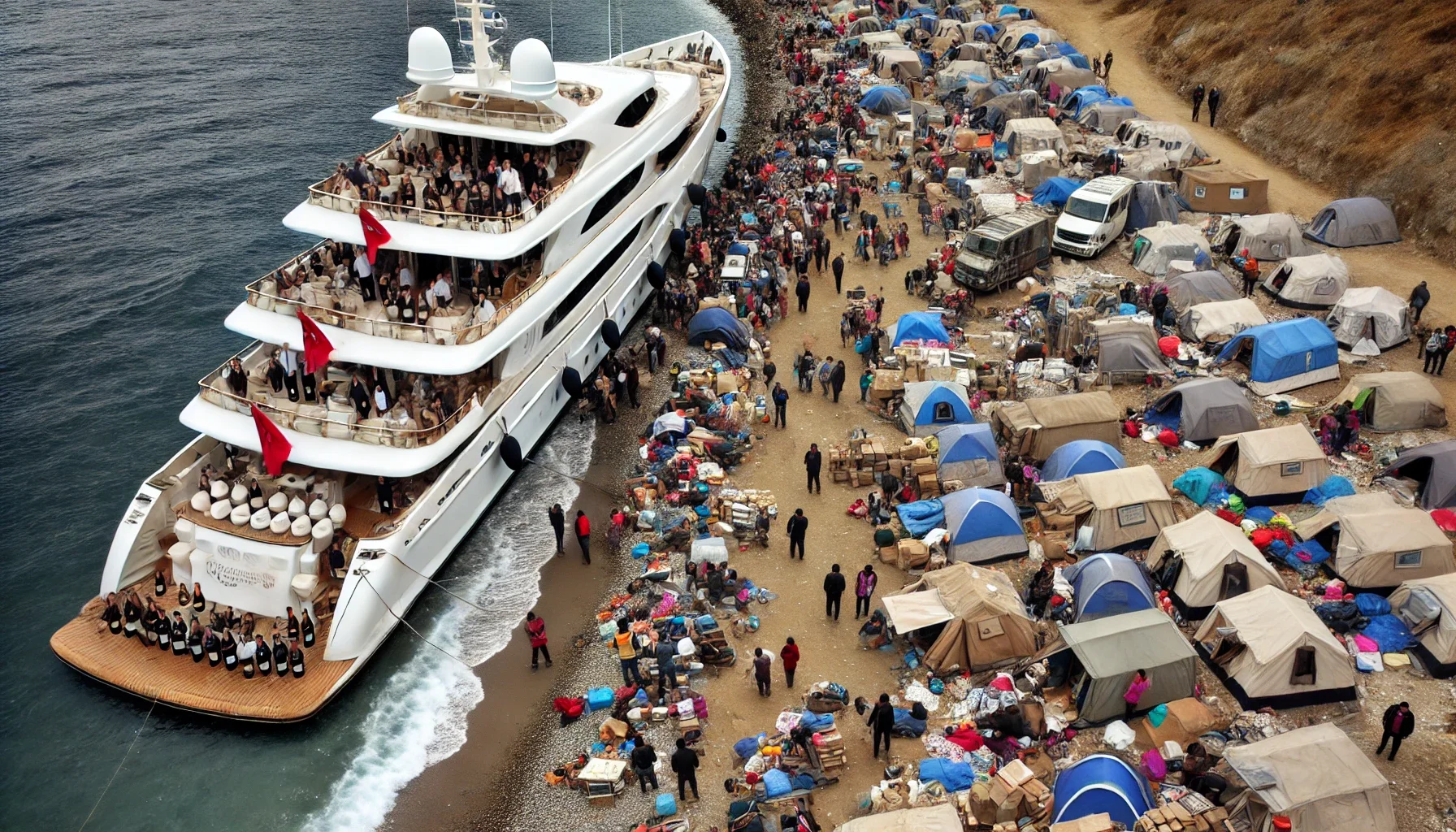
Let us Count the Ways: Loans, Debt, and Externalities
As the world system has evolved, so have the ways in which the rich take from the poor. For centuries, Europe used military strength and technological superiority to conquer, colonize, and pillage African, Asian, and Latin American territories. After decimating the indigenous Americans and taking over that continent’s treasure trove, the United States began assembling its global empire in the late 19th century. Then, two world wars between the colonial empires ended European mastery of the world and ushered in the neo-imperialists, who, rather than resorting to outright conquest and rule, have since dominated the Global South from their boardrooms and desktops with business and financial transactions formalized through legal agreements. Multi-national corporations have replaced nation-states as the principal actors on the world stage. Using McWorld as a metaphor for global corporations, analyst Benjamin Barber suggests that “The usurping dominion of McWorld has … shifted sovereignty to the domain of global corporations and the world markets they control”.
What has not changed is the fundamental formula: the rich exploit the resources and manual labor of the poor to produce and sell expensive goods and services to the middle and upper classes. In McWorld, corporations headquartered mostly in the Global North develop large industrial farms, plantations, and mining, drilling, and logging operations in the global South along with the ports, roads, airports, and dams to funnel all this booty home—mainly to the U.S., Western Europe, Japan, and, more recently, China. The host Global South countries pay for the infrastructure with loans taken from large Global North banks (such as JP Morgan, Mitsubishi UFG, and HSBC) and lending organizations, mainly the World Bank and International Monetary Fund. And then, in an economic system that has gone from the merely absurd to the madly preposterous, the poor countries export their food, minerals, and timber as repayment on those loans.
The world’s wealthiest have netted trillions of dollars in the last several decades on debt payments, alone. Cumulative Third World debt to financial institutions rose from $70 billion in 1970 to over $2300 billion ($2.3 trillion) by 2000, a 33-fold increase in that century’s last three decades. It reached four trillion dollars in 2010 and eleven trillion dollars in 2020. In remarks to the press announcing a 2023 ‘World of Debt Report,’ the UN Secretary-General António Guterres stated that, “A growing share [of Global South debt] is held by private creditors who charge sky-high interest rates to many developing countries. On average, African countries pay four times more for borrowing than the United States and eight times more than the wealthiest European countries.” “It is,” he continued, “… one result of the inequality built into our outdated global financial system, which reflects the colonial power dynamics of the era when it was created.”
As for the loans, themselves, much of the money is pocketed by local oligarchs and corrupt functionaries and businesspeople all along the loan and project chain and then sent abroad into offshore accounts or to be laundered by banks and businesses in the Global North. The “legitimate” portion funds dubious large-scale projects—oil refineries and hydroelectric dams, palm oil plantations and cattle operations, rail systems and gold mines—mainly to extract resources that are then funneled Northward. These projects often provide few advantages to the host country, but they cost the citizens dearly. Their forests are razed, rivers and coastal waters polluted, farmlands degraded, and millions of people lose their livelihoods and are displaced from their homes without compensation. And, of course, they must pay back the loans through their taxes and the selling of their commodities, the only export this vicious cycle provides them.
To exploit resources in the Global South, transnational corporations often move their entire operations to these countries where labor is cheap, the environmental regulations are weak, and taxes low to nonexistent. These and the aforementioned consequences (debt, pollution, chronic poverty and hunger, the loss of fisheries and habitats) are examples of externalities, costs to a society that are either caused by business or needed for their operation but are not paid for by them. Since these costs are shouldered by disenfranchised citizens in the Global South, they represent a massive upward redistribution of wealth, a form of taxation without representation.
Making this upward flow of wealth even more perfidious is the fact that many of these loans were made when the borrowing countries were struggling, sometimes even in crisis. It was often clear to both the First World financiers and to the Third World oligarchs and functionaries that these were risky loans for which the debtor nations would find it difficult to pay even the interest, much less repay in full. And if countries weren’t in crisis before the transactions, they often were afterward. Ceyla Pazarbaşioğlu, a Turkish economist and mover and shaker within the IMF and World Bank realm, noted that, “History shows that large debt surges often coincide with financial crises in developing countries, at great cost to the population.” According to a World Bank press release for its book Global Waves of Debt, “Since 1970, about half of the 521 national episodes of rapid debt growth in developing countries have been accompanied by financial crises that significantly weakened per-capita income and investment.” The latest debt surge, starting in 2010, had brought the total public and private debt by developing countries to a staggering 55 trillion dollars by 2018.
Each and every year, developing countries pay far more on their debts than they receive in loans, aid, and investment. Since 1990, the annual interest payments, alone, have exceeded 200 billion dollars. By 2021, developing countries were paying $400 billion dollars to service their debts, double what they received in aid, according to the UN. The debt payments have eaten increasingly more of government budgets in the Global South, more than doubling the share of revenue over this century’s second decade. To make payments simply on the interest of these loans, developing countries have adopted any number of short-term strategies that hurt them in the long run. They borrow more from their creditors (often at inflated interest rates), and they sell their resources at bargain basement prices. The increasing public debt precludes the already cash-strapped governments from importing essential foods and providing social programs or safety nets, much less investing for the long-term in education, health, and public utilities and infrastructure. According to a 2021 UNICEF report, for most developing countries, the cost of servicing their external debt now exceeds expenditures on health, education, and social protection combined.
And debt makes the borrowing nations vulnerable to the directives of their First World overlords. In 2002, for instance, as southern Africa was slipping into a drought-induced food crisis, the World Bank and IMF insisted that Malawi repay commercial loans with its grain surplus. On the advice of a European Union consultant, it sold its entire grain reserve, much of which was hoarded by commercial traders and then resold when grain fetched higher prices during the food crisis. Had Malawi been able to behave as an sovereign nation independent of the international loan sharks and its own greedy government elites, it could have stored its grain surplus in reserves to be distributed at a fair price to its poor and hungry.
Neo-imperialism, as it turns out, has proved to be the most effective and efficient, least risky, and therefore, so far, cleverest technique for the self-enrichment of Global South plutocrats and their elite minions. Unlike colonialism, neo-imperialism does not carry the costs of military occupation, sprawling bureaucracies, or the numerous inconvenient obligations to the indigenous population. The British empire was blamed for mismanaging both the Irish Famine of 1845-1849 and the 1943 famine in Bengal. In the past fifty years, however, the legacy of colonialism has been conveniently ignored and famines have been blamed on the famished, themselves, and their impoverished, often unstable and conflict-ridden governments. Although First World banks and businesses have maintained a one-way conveyor belt of raw materials from Africa to the old colonial powers, they have taken no responsibility for the dozens of famines on that continent (how can they, banks are not people, after all, and governments in the Global North have no legal obligation to intervene.