How We Are Complicit in the Suffering of the Poor and Hungry
Awareness is the first step towards disentangling ourselves from our unwitting participation.
In his seminal essay, Famine, Affluence, and Morality, the philosopher Peter Singer argues (rather persuasively, I feel) that the affluent people of the world are morally obligated to donate far more of their wealth to the less fortunate than they are wont to do.
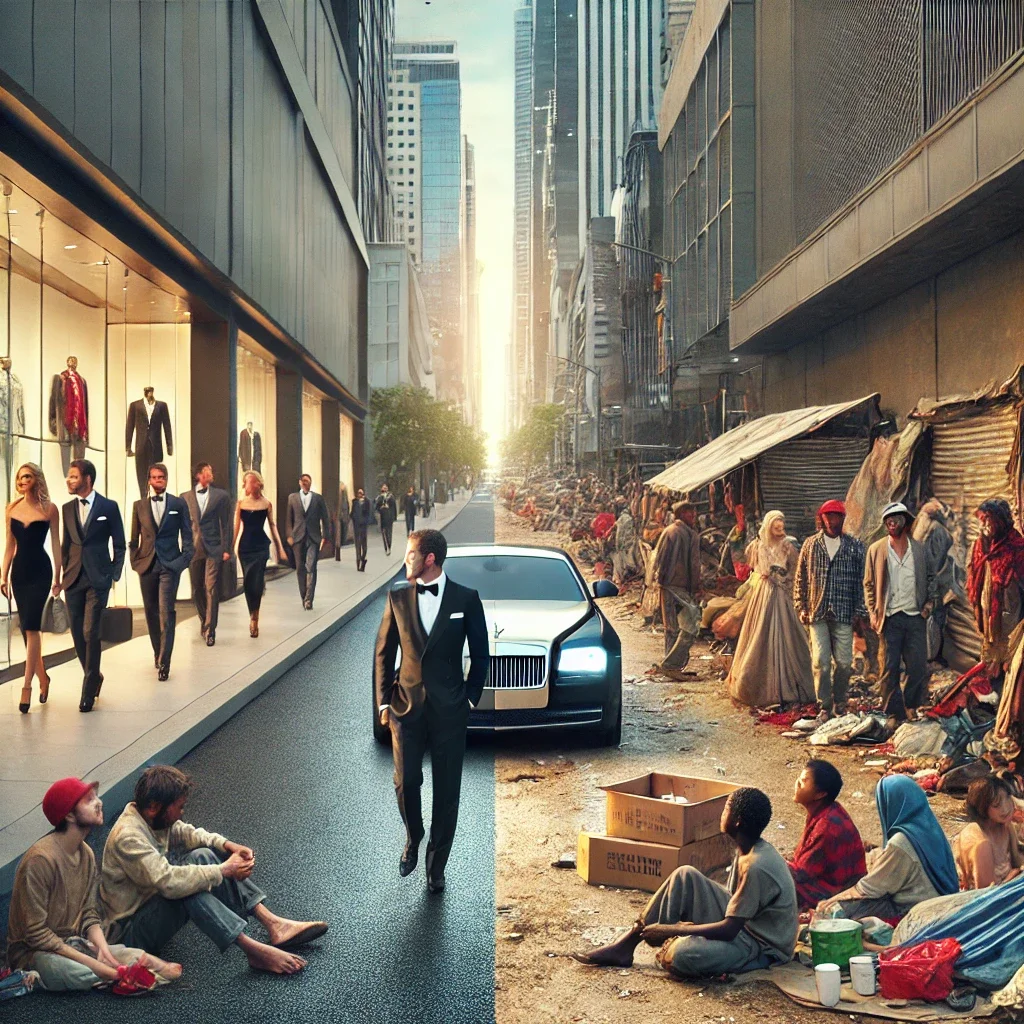
The irrefutable fact is that, in a world awash in wealth and material abundance, relatively little of that wealth goes into rectifying the injustice of gross poverty and hunger. The world’s wealthiest billion people (which includes the majority of Americans) spend trillions of dollars on entertainment, new cars, furniture, lawn care, and all the baubles for our homes before we share a few dollars with the billions of people who do not have enough food, medicine, and potable water. Americans believe that they are an overly generous people, doling out—according to those polled—some 25 percent of their tax dollars to foreign aid. In fact, it’s closer to zero. Germans, the Japanese, and Americans spend 0.61%, 0.28%, and 0.17%, respectively, of their gross national income on foreign aid. For Americans, that’s a dollar and seventy cents for our every thousand dollars of income.
Our moral failing as citizens of the Global North lies not only in our refusal to share our enormous wealth. It is also that we choose to spend our wealth on items that literally take food out of the mouths of hungry children. When, for instance, we eat the meat of animals who were raised in massive stockyards and were fed grain for fast, profitable growth, we are willfully participating in a food system that is both cruel to the animals (stockyards are cramped and alien environments, and grain is not their natural food and therefore causes them gastrointestinal pain) and it is cruel to people (at least of a third of cereals harvested go to livestock feed, depriving humans of that abundance). When we burn gasoline in our cars that is ten percent ethanol, the energy that powers our gratuitous drives to the coffee shop comes from corn, sugar cane, or some other food plant that will not be feeding a human being in need. Worse, because biofuels are now competing with food for land, labor, fertilizer, water, pesticides, and capital, using food crops for fuel raises the price of those grains and, in a vicious feedback loop, encourages farmers to devote more farmland to biofuels. As always, the poor and hungry are the most gravely affected.
The causes of poverty and hunger, however, involve actions that are far more willful and nefarious than all that. Most people are unaware of the suffering of the cattle, pigs, and chickens that they eat or of the foolishness of biofuels. But there are many business people and their well-paid functionaries involved in our food systems who knowingly take advantage of and perpetuate inequality, and by manipulating our laws and consumer habits they make us unwitting accomplices.
It must also be acknowledged that the citizens of affluent countries are complicit in perpetuating world poverty, hunger, and famine in another very important way. The philosopher Thomas Pogge describes it like this: “We are implicated … because our great privileges and advantage as well as their extreme poverty and disadvantage have emerged through one historical process that was pervaded by unimaginable crimes. To be sure, we bear absolutely no moral responsibility for these crimes, even if we are direct descendants of people who do. Still, we are at fault for continuing to enforce the extreme inequalities that emerged in the course of that deeply unjust historical process.” The way to disentangle ourselves from our (often) unwitting participation in this process begins with an awareness of history and of the ways in which the wealthy continue to defend their wealth, maintain their advantages, and harm the poor and vulnerable. Without an understanding of the deeper roots of our complicity, efforts to right the wrongs will remain superficial and inadequate.
Inequity is institutionalized inequality, or the unfair and unjust use of wealth and power to maintain economic and social disparities. Underlying most human suffering in this world is the inequity within and between nations created and maintained through the power of wealth. Oligarchs and plutocrats—working on all scales, from the local to the global—have, by definition, the most power to defend and expand their wealth. As will detail in coming posts, the consequences of their actions often adversely impact the poorest, therefore perpetuating inequity, chronic hunger, and what I call the perpetual famine – the premature deaths of more than ten million people each year from diseases their malnourished bodies cannot fight.
And, as tens of thousands of media reports, books, and movies have revealed, they often caused this harm knowingly and willingly. The TV newsmagazine Sixty Minutes has successfully aired for over fifty years by each week exposing another case of reprehensible corporate waywardness—some mix of malefaction, crime, corruption, fraud, and coverup—that has harmed and killed some shocking number of innocents. Even here we have our part. As they represent but a tiny fraction of society, oligarchs and plutocrats can profit from their bad behaviors only with either our compliance, consent, or outright collaboration. Millions of us have read the newspaper articles and watched the documentaries detailing corporate wrongdoing, and hundreds of millions of us (from bankers, politicians, marketers, and lawyers to educators, news reporters, salespeople, and farmers) will for a decent wage do their bidding, wittingly or not. Of the many and complicated ways that wealth is defended and expanded at the expense of the poor, I will, in the following posts, address those that directly exacerbate chronic hunger, the perpetual famine, and the coming famines of this century.