The American Military Thrives on Outdated Symbols and Paradigms
It is Time for Strength Through Peace
The military derives its power from a worldview that it must continuously help to shape. Besides spreading itself strategically across all 435 voting districts and camouflaging its budget and wealth, the military insures its viability by brilliantly exploiting the power of myths, meaning, and symbolism.
This is not new to this particular institution. Groups at all scales—whether they are an organization, institution, or nation-state—understand that myths, symbolism, and meaning are as indispensable to their survival as are the other more obvious factors, such as material wealth, the capability of its leaders, the structure of the group, and the group’s politics. Religion thrives on its alleged relationship to the Ultimate through myth, symbolism, and meaning. Insurance companies, banks, and seats of government reside in monumental buildings to project stability and instill a sense of confidence in their constituents.
And the American military projects to its citizens a humble, stoic mystique. One of the unwilling hero who must sacrifice himself for the good of his peace-loving nation to a hostile, greedy, and unpredictable world.
What it really sacrifices, however, are its citizens-turned-warriors. The military institution, itself, sacrifices nothing. It only gains by war, fear, and enemies, real and imagined. While bringing in ever more revenue and generating a career treadmill, it uses the common man and woman as fodder and then enjoys great honor by their personal sacrifice. While young (and mostly poor) soldiers die for their country, many retiring generals obtain six figure salaries as consultants and lobbyists for the American war machine.
In paying the ultimate price, the warriors prove that they believed wholeheartedly in the myths of their institution. For, as the leadership gurus Lee Bolman and Terrence Deal explain, “… shared myth fosters internal cohesion and a sense of direction while helping maintain confidence and the support of external constituencies.” And what powerful symbols! Courage, honor, loyalty, sacrifice. The ultimate values of the warrior, of a worldview created by powerful men on horseback and promulgated by aristocrats in big houses who owned slaves and serfs and all the land worth having.
It isn’t that these values have become anachronistic in our times or within a biospheric consciousness; only that they are no longer viewed as the highest values, but rather become included in one’s repertoire of values, transcended by more inclusive values of love, compassion, honesty, and tolerance.
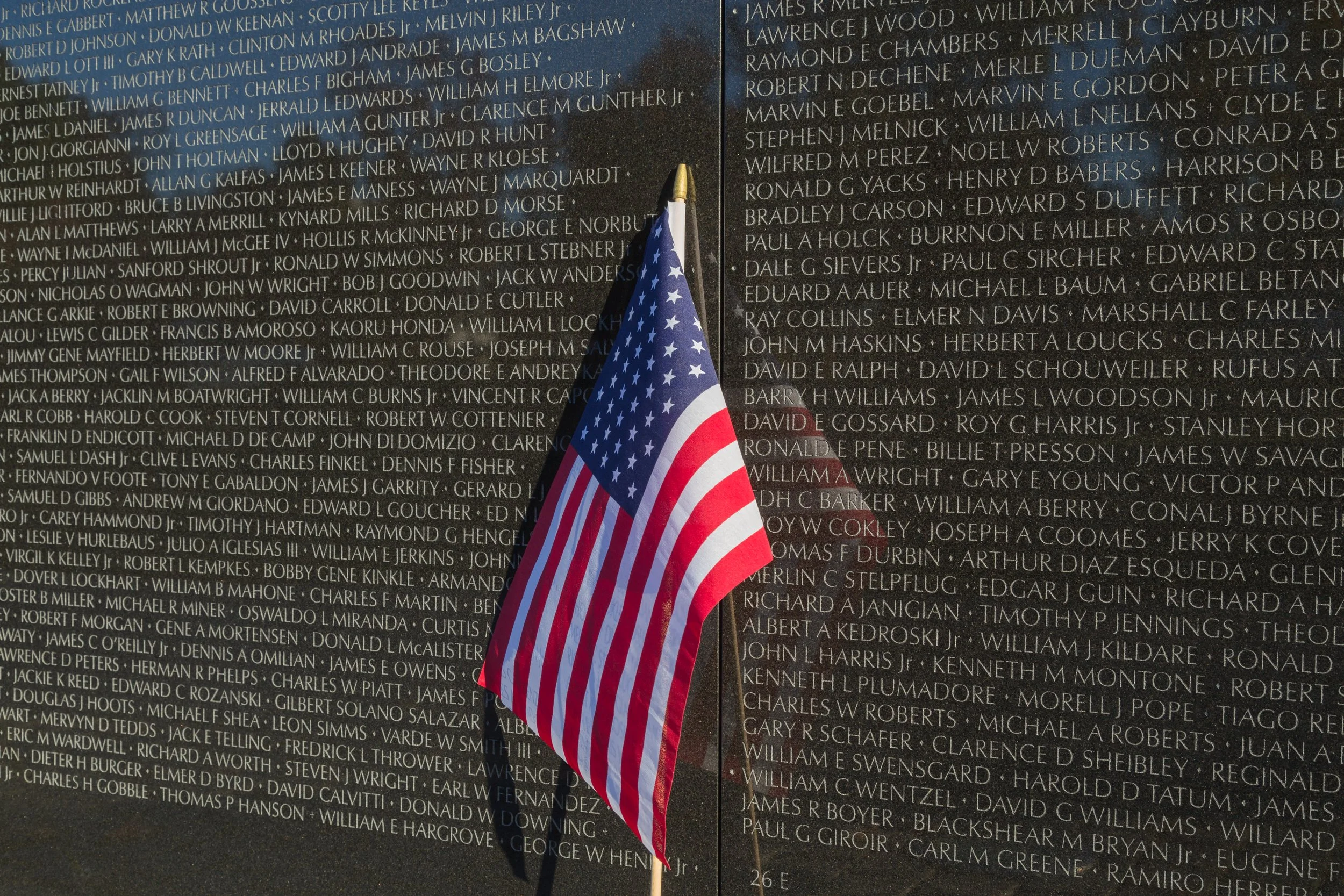
The values of the military and the perception of its unquestionable honor are maintained through Hollywood movies, television shows, video games, advertisements, and national monuments, to name a few. Admirable characters on the screen; powerful images in stone. More statues and entire monuments are dedicated in Washington D.C. to war and warriors than to any other single theme. This is another powerful way in which tax revenues not directly allocated to the Department of Defense supports the institution.
Furthermore, these evocative symbols are cynically exploited in film, television, video games, advertisements, and political campaign speeches, evidencing the “support of external constituencies” for the military.
In its most recent decades of war on Iraq, the American military enjoyed the obeisance of the other institutions, particularly the media and the government. There was little coverage of the annihilation of the Iraqi society and the deaths of the many hundreds of thousands of its civilians. Rather, stories focused mainly on the American soldiers, their courage, homesickness, and various human-interest stories. And even then, only at a distance.
From the war in Vietnam, the military learned to censor the images of the homecoming of caskets and body bags. And, for whatever their reasons may be, the media chose to give little attention to the estimated 500 thousand American soldiers permanently maimed, physically and mentally. The media quietly deferred on these issues. Indeed, much of the media favored the wars in Vietnam, Afghanistan, and Iraq and even remained their ardent cheerleaders long after the wars had lost their last shred of legitimacy.
In Iraq no yellowcake uranium was found, no weapons of mass destruction, no Al Queda connection to Saddam Hussein. Support came from even liberal stalwarts such as the New York Time’s Thomas Freidman. And then, rather than insisting on covering the war with an objective lens, the media capitulated to military constraints and obediently “embedded” six hundred of its newscasters into the American forces.
Between 2002 and 2008, the television networks even hired retired generals to provide commentary and analysis on battle strategy and tactics. Serving as the Pentagon’s “message force multipliers” in the media, some seventy-five such analysts with ties to the Pentagon barraged the American airwaves. Retired four-star army general Barry McCaffrey, alone, appeared nearly a thousand times on NBC and its affiliates.
No reason to belabor the point. Clearly, the military institution is intimately and intricately enmeshed with the other institutions. An implication of the term “military-industrial complex.” There is no need for theories of conspiracy or monolithic power. As the sociologist C. Wright Mills had noted in his 1956 book The Power Elite (and numerous others have documented), the military, business, and political leaders, are impelled by mutual interests of class and shared paradigm. The charge against them of self-serving cynicism must be softened by the observation that they truly believe in the rightness of their worldview.
Within worldviews, myths, and beliefs, “What is most important about any event,” says Bolman and Deal, “is not what happened but what it means.” For much of the world outside the United States, these wars have meant that the U.S. would continue to exert its economic and military ambitions at the expense of less powerful (non-European) peoples. According to the official American version, the latest war meant that once again the good intentions of the U.S. has mired it in the insane affairs of less civilized societies.
To American politicians, the war has meant an air of “only unequivocal, unhesitating adulation” requiring strict adherence to a script that honors the “courage” and “sacrifice” of the men and women who “protect our freedom.” Any politician risks political suicide for straying from the script, for not “supporting the troops” or not displaying an American flag lapel.
To many American soldiers the war has meant dismemberment, brain damage, psychological trauma, economic ruin, and alienation from friends and family. For the Iraqis it has meant all that and more, of facing the terror of a civilization destroyed.
To the military it has meant trillions of dollars and a powerful voice in the affairs of humanity.
As for the larger human predicament, there is little to indicate that the major players in the military institution have comprehended the ecologic crisis as a problem that subsumes its interest. It is not that they are ignorant of the ecological crisis. On the contrary. Given their mandate as defenders of the nation and given the first-rate education and intellectual quality of their upper ranks and given their unparalleled access to information regarding threats to the United States, they—more than anyone—are acutely aware of the enormity of the ecologic and demographic crises.
The Pentagon now ranks “global warming as a destabilizing force” that will affect the security of the military and the United States. For sound military reasons, Navy Secretary Ray Mabus set an (unofficial) goal for the Navy: “Half of all energy the Navy uses will be non fossil fuel by 2020,” he promised. The air force and marines, too, are developing large-scale strategies that will reduce both their energy consumption and their dependence on unfriendly suppliers. Presently, the military uses more petroleum and spews more carbon dioxide than all but the thirty-five largest nations. And just to add some oil to the fire, Newsweek estimates that three out of every four Superfund waste sites in the United States (that is, 900 of 1200) “are abandoned military facilities or sites that otherwise support military needs.”
As with any institution, the military’s principle purpose is to serve its own self-interest. In so doing, the U.S. military also serves to protect the hegemony of its country and the contemporary global paradigm. It is not about equity and it is not about a long-term sustainable existence on this planet. The military remains the coercive muscle that keeps the oil flowing and the goods shipping to a powerful, decadent, and indebted empire. Again, Eisenhower’s 1961 farewell speech was edifying when he reminded us that: “Every gun that is made, every warship launched, every rocket fired signifies, in the final sense, a theft from those who hunger and are not fed, those who are cold and are not clothed.”
And the military is not about sustainability, as evidenced by its petroleum profligacy, its squandering of precious metals, electronics, engineers, and other skilled labor for reasons of destruction when all these could be compassionately redirected. The military institution is grounded in an old paradigm of waste, destruction, and profligacy at a time when humanity’s material wealth needs to be carefully metered. Worldwide, over $2.4 trillion is spent on the military. Since worldviews and “myths are stubbornly persistent, potentially blocking adaptation to changing conditions,” the military sits as a major obstacle to a new planetary paradigm of sustainability and equity.