
The American Military is Bad for Americans
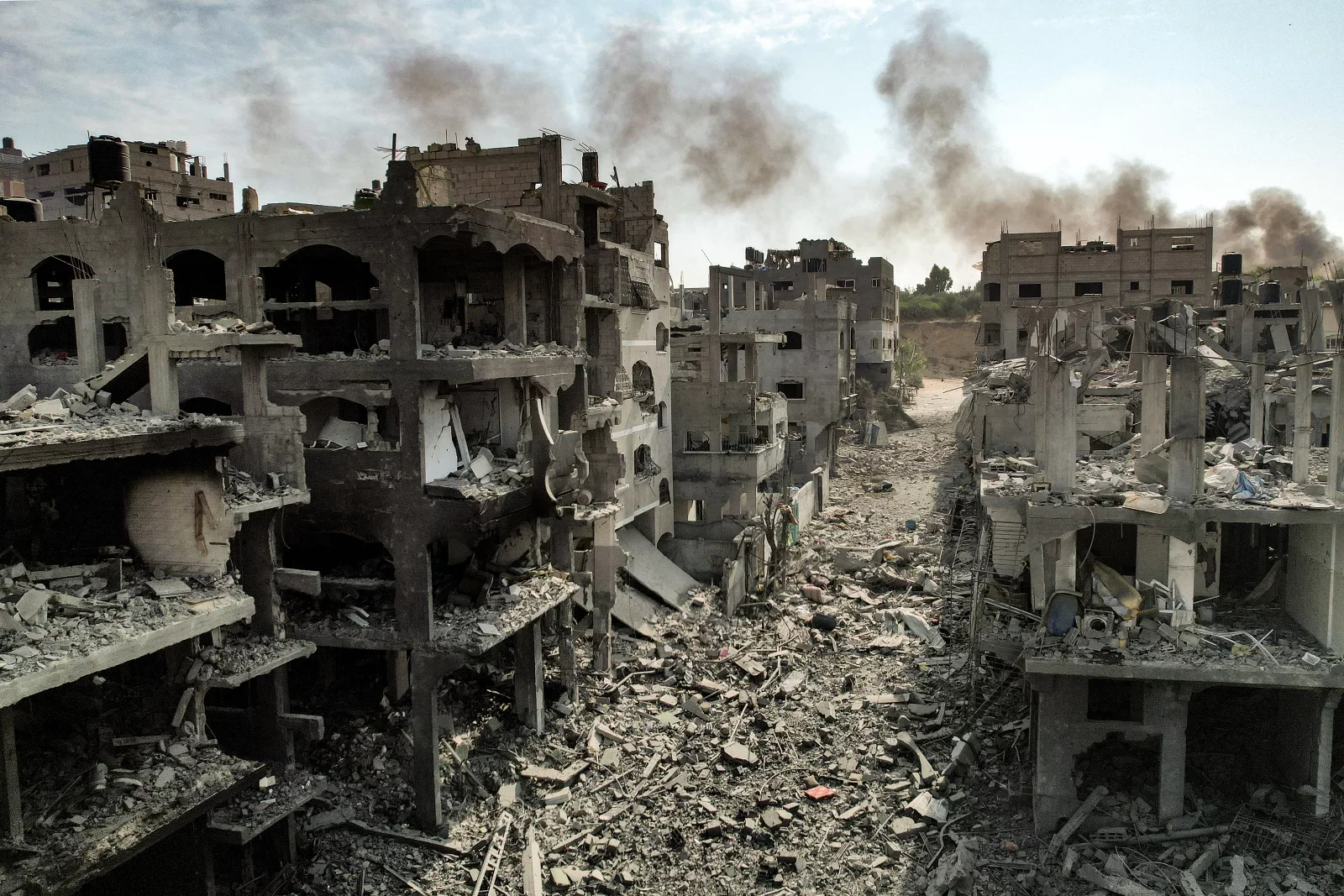
We Cannot Afford the American Military
The Most Destructive Institution
According to some historians, all of Civilization is a result of the emergence of warfare. The organization of society and the development of kingdoms and nation-states, religion, technology, culture, history, everything has been a response – in this view – to the escalating force of men in arms.
The last four millennia of China’s history serve as an exemplar, according to both Francis Fukuyama in The Origins of Political Order and Mark Elvin in The Retreat of the Elephants. The war metaphor of Retreat suggests that, through the millennia, humanity’s western spread across the Asian continent has come at the expense of another large-bodied species, emblemized by the otherwise indomitable elephant. The war has featured not only humanity against itself but against everything living.
If this premise is correct, if military and war were the primary cause and the central institution of civilization – and no opinion is offered here on this hypothesis – but if this premise were true, then our present situation where corporations are royalty represents a significant evolutionary advance. For however predatory and rapacious corporate capitalism may be, its methods of wealth extraction have sometimes been less brutal than the military’s. They often use other slightly more subtle – if no less dehumanizing – tactics to assert their domination.
But the military represents, without equivocation, the most violent, bestial, testosterone-induced, fear and terror (“shock and awe”) dimension of the human repertoire. Whatever its role has been in the surreality of cultural memory, the military remains a powerful institution in the affairs of our planet.
There are only three countries of more than a million people without standing armies—Costa Rica, Panama, and Mauritius. In most of the rest, the military exerts a strong, if usually invisible, influence on the social order. As Mao Zedong famously proclaimed, “Political power grows out of the barrel of a gun.” The American empire, beginning with the Monroe doctrine in 1823, has been increasingly predicated on that axiom.
U.S. Military Power does not Serve Americans’ Interests
Although the military’s enormous power and wealth is regularly justified as being necessary for the security of the United States and the freedom of its people, there is little evidence to support that notion. Americans are no safer than people of any other stable government. They are killed by foreign powers in no smaller numbers than are citizens of any other First World country. If anything – given America’s numerous conflicts and the three thousand deaths of the 9/11 attacks – the opposite is the case. American military power has made Americans less safe.
Meanwhile, while maintaining the world’s number one military, the United States has become the world’s most indebted country and the least developed of all “developed countries.”
· Its poverty rate is 36th among the 37 OECD countries,
· and its citizens hold the highest average credit card debt.
· Its healthcare ranks 69th in the world,
· and its longevity ranks 48th,
· although its health care system is the world’s most expensive.
· It ranks 136th in terms of income equality…
· and 156th in wealth equality.
· It has by far the highest rate of murders and gun homicides among developed countries
· and the fifth highest incarceration rate in the world.
The military’s wealth and power does, however, serve the more obvious self-interests of the institution, itself, verifying President Dwight Eisenhower’s warning of what he famously called the “military-industrial complex.” Given by the former five-star general and Supreme Commander of the Allied forces in Europe during World War II, Eisenhower’s presidential “farewell address to the nation” in 1961, included this caveat:
“This conjunction of an immense military establishment and a large arms industry is new in the American experience. The total influence — economic, political, even spiritual — is felt in every city, every statehouse, every office of the federal government. We recognize the imperative need for this development. Yet we must not fail to comprehend its grave implications. Our toil, resources and livelihood are all involved; so is the very structure of our society. In the councils of government, we must guard against the acquisition of unwarranted influence, whether sought or unsought, by the military-industrial complex. The potential for the disastrous rise of misplaced power exists and will persist. We must never let the weight of this combination endanger our liberties or democratic processes.”
George Kennan is remembered for similar warnings. Called the “most influential diplomat of the 20th century,” and profusely honored for his service and his writings, Kennan was a key architect in the strategy of political (as opposed to military) containment of the Soviet Union during the Cold War. He wrote in the forward to Norman Cousin’s 1987 book The Pathology of Power, “Were the Soviet Union to sink tomorrow under the waters of the ocean, the American military-industrial complex would have to remain, substantially unchanged, until some other adversary could be invented. Anything else would be an unacceptable shock to the American economy.”
The U.S. Military is Big Business
It would be a shock because the U.S. economy depends in no small part on the military. Every congressional voting district – all 435 of them – in the United States is tied to the military, either by the presence of one or more of the 440 domestic military bases or through businesses dependent on military contracts.
The United States military is the world’s single largest consumer. Hundreds of billions of dollars go into the purchase of a nearly unimaginable spectrum of products—a myriad of ships, satellites, land vehicles, aircraft and weapons, clothes and uniforms, buildings, furniture, office and electronic equipment, roads, power stations and electric grids, landscaping and lawn maintenance, food, kitchens and dining room equipment, linen, beds and bedding, print and internet media, entertainment venues, bowling alleys, golf courses, tennis courts, swimming pools, subsidized commissaries (the PX), package stores, and on infinitum—plus all the products and personnel who service and maintain this parallel world. Aptly, the Department of Defense has been called “the largest industrial entity in the United States, and the president is its CEO.”
Each year, the military funnels hundreds of billions of American tax dollars into the accounts of private businesses. Hundreds of billions of dollars of products and services that the American citizens do not buy directly. Perhaps don’t want to buy because they do not need them or cannot buy because of personal and national debt. According to Kevin Carson, “The chief virtue of the military economy is its utter unproductivity. That is, it does not compete with private industry to supply any good for which there is consumer demand.”
Or, seeing it from the supply side of the economic equation, there are hundreds of billions of dollars of excess production that the American citizenry, on their own, cannot absorb. Large financial institutions are awash in funds and big business is overstocked in manufacturing potential for which they have no consumer. By buying their excess production capacity, it is in a sense another way that government subsidizes big business.
The Military and Big Business Need Big Enemies
Clearly, Kenan’s prediction about invented adversaries did come true. After the Soviet Union sank just a few short years later, one might have been forgiven for thinking that we were safer and that the military spending might go back to peacetime levels. But as Kennan had presaged, other dangerous enemies suddenly surfaced. Enemies we never knew existed—George W. Bush’s “Axis of Evil” triune, Iraq, Iran, and North Korea, then Saddam Hussein, Al Queda, the Taliban, and ISIS—were somehow even more powerful than the Soviet Union. Or so the media pundits had us believe and the logic of the ever-rising military budget would suggest. And, quite serendipitously for this permanent war economy, now looming over the horizon is the expanding specter of China.
In gearing up for an arms race arms race with China and Russia, the U.S. military is preparing Congress to spend nearly two trillion dollars in the coming decade just to upgrade the U.S. nuclear arsenal.
The Pentagon is promising that the terrifying threats from China and Russia include not only nuclear annihilation but future wars that feature hypersonic missiles, satellite warfare, cyberspace, robotic and drone warfare, as well as lethal naval and air engagements. That will require trillions more.
We Cannot Afford the American Military
Maintaining enemies has been very costly to the American taxpayer. According to a paper by Neta Crawford at the Watson Institute at Brown University, the cost of twenty years of war since 9/11 will ultimately total “about $8 trillion in current dollars.” This is not for entire military budget, just for wars. Most of that will come in the way of debt to our children because the country was not able to simply dip into its pockets and pay for the wars in Iraq and Afghanistan. As states and empires and kingdoms have been doing for centuries, the U.S. government borrowed from banks to pay for its ventures, and the banks will be profiting for decades.
In 1961, the year of Eisenhower’s farewell address, the official defense budget was 41 billion dollars, less than a twentieth of what it has been allocated in any given year so far in the 21st century. Presently, as a previous post demonstrated, the United States military takes up $2.4 trillion, or 36 percent, of the federal budget. This is far more than the official version, the twelve or fourteen or whatever percent that is routinely quoted in the media, mainstream or otherwise.
That is 2.4 trillion dollars taken each year from the citizen-consumer in the way of taxes (and debt) and then given to banks, business, and the military in what has become one of the world’s largest upward redistributions of wealth. An average of $7000 a year from every American man, woman, and child. Should Americans be able to keep that money spent on “their defense,” they would likely be far safer, wealthier, healthier, and less likely to be imprisoned for “crimes of poverty.”