A True Revolution of Values
In honor of Dr. Martin Luther King Jr.
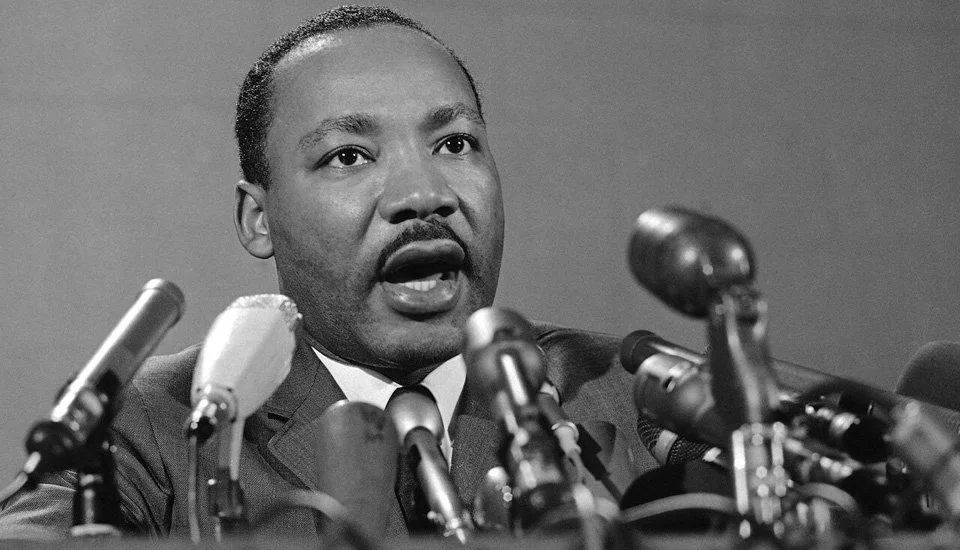
On April 4, 1967, Dr. Martin Luther King, Jr. delivered his most controversial and courageous speech, “Beyond Vietnam: A Time to Break Silence,” to some three thousand congregants at the Riverside Church in New York City.
For speaking forcefully against the war and for attempting to bridge the civil rights and peace movements, he was condemned by a vast majority of Americans, by even the liberal press, including the New York Times and the Washington Post, and by most of the civil rights movement.
On April 30, he delivered a version of the speech, “Why I Oppose the War in Vietnam” at the Ebenezer Baptist Church in Atlanta, Georgia. There are few moments when a speaker of such oratorical gifts has fused the historical, the analytical and spiritual so elegantly and have been so damning of the rulers of his time. And so it should come as a surprise that these are some of his least well-known speeches, least shown on MLK day, have the smallest online presence, and accompanied by comparatively so little historical analysis.
Sadly, in these fifty years since Dr. King’s little has changed in America’s imperial behaviors. Should one replace Iraq and Afghanistan for Vietnam one would find little incongruity.
The following are excerpts from “Beyond Vietnam: A Time to Break Silence.”
I am convinced that if we are to get on to the right side of the world revolution, we as a nation must undergo a radical revolution of values. We must rapidly begin the shift from a thing-oriented society to a person-oriented society. When machines and computers, profit motives and property rights, are considered more important than people, the giant triplets of racism, extreme materialism, and militarism are incapable of being conquered.
A true revolution of values will soon cause us to question the fairness and justice of many of our past and present policies.
A true revolution of values will soon look uneasily on the glaring contrast of poverty and wealth. With righteous indignation, it will look across the seas and see individual capitalists of the West investing huge sums of money in Asia, Africa, and South America, only to take the profits out with no concern for the social betterment of the countries, and say, “This is not just.” It will look at our alliance with the landed gentry of South America and say, “This is not just.” The Western arrogance of feeling that it has everything to teach others and nothing to learn from them is not just.
A true revolution of values will lay hand on the world order and say of war, “This way of settling differences is not just.” This business of burning human beings with napalm, of filling our nation’s homes with orphans and widows, of injecting poisonous drugs of hate into the veins of peoples normally humane, of sending men home from dark and bloody battlefields physically handicapped and psychologically deranged, cannot be reconciled with wisdom, justice, and love. A nation that continues year after year to spend more money on military defense than on programs of social uplift is approaching spiritual death. [sustained applause]
A genuine revolution of values means in the final analysis that our loyalties must become ecumenical rather than sectional. Every nation must now develop an overriding loyalty to mankind as a whole in order to preserve the best in their individual societies.
This call for a worldwide fellowship that lifts neighborly concern beyond one’s tribe, race, class, and nation is in reality a call for an all-embracing and unconditional love for all mankind…. has now become an absolute necessity for the survival of man.
We can no longer afford to worship the god of hate or bow before the altar of retaliation. The oceans of history are made turbulent by the ever-rising tides of hate. History is cluttered with the wreckage of nations and individuals that pursued this self-defeating path of hate. As Arnold Toynbee says: “Love is the ultimate force that makes for the saving choice of life and good against the damning choice of death and evil. Therefore the first hope in our inventory must be the hope that love is going to have the last word.”
We are now faced with the fact, my friends, that tomorrow is today. We are confronted with the fierce urgency of now. In this unfolding conundrum of life and history, there is such a thing as being too late. Procrastination is still the thief of time. Life often leaves us standing bare, naked, and dejected with a lost opportunity. The tide in the affairs of men does not remain at flood—it ebbs. We may cry out desperately for time to pause in her passage, but time is adamant to every plea and rushes on. Over the bleached bones and jumbled residues of numerous civilizations are written the pathetic words, “Too late.” There is an invisible book of life that faithfully records our vigilance or our neglect. Omar Khayyam is right: “The moving finger writes, and having writ moves on.”
We still have a choice today: nonviolent coexistence or violent coannihilation. We must move past indecision to action. We must find new ways to speak for peace in Vietnam and justice throughout the developing world, a world that borders on our doors. If we do not act, we shall surely be dragged down the long, dark, and shameful corridors of time reserved for those who possess power without compassion, might without morality, and strength without sight.
On April 4, 1968, exactly one year after this speech, Dr. King was fatally shot.