
The American War Machine Costs Far More than You Think
What Every American Needs to Know
What is Real Cost of Armed Conflict?
Each year, humanity spends unfathomable trillions on militaries worldwide. While these figures are staggering in isolation, their deeper implications reveal an even graver truth. This is not just a financial burden—it represents a moral and ecological catastrophe. The resources diverted to war could solve humanity’s greatest challenges, from climate change to global poverty. Instead, warfare continues to devastate not only human lives but also the very systems that sustain them.
Armed conflict and war not only involve the most morally repugnant of human behaviors; they are also a profound waste of natural resources and human labor, attention, and passion. Armed conflict destroys farmland and infrastructure, frightens (and sometimes conscripts or kills) smallholder farmers and traders away from their fields, roads, and markets, and cripples the local and regional economies. Food becomes scarce, livelihoods are destroyed, communities are shattered. In regions that are undeveloped economically and vulnerable environmentally, war can be the final straw that breaks a community’s resilience.
The American Century: A Legacy of Conflict
For over seventy years, the United States has played a leading role in global armed conflict. From the atomic bombings of Hiroshima and Nagasaki in 1945 to present-day proxy wars, the U.S. military-industrial complex has left an indelible mark on humanity. Since 1950 the United States has been involved in over fifty armed conflicts, with devastating consequences.
In that time, it has fought proxy wars in Greece, Korea, Vietnam, Afghanistan, Angola, and Israel. It invaded and bombed, in a manner unprecedented in the receiving country’s history, the following—Korea 1950-1953, Laos 1965-1973, Cambodia 1969-1973, Vietnam circa 1965-1973, Sudan 1998, Kosovo 1999; and Iraq in at least five distinct acts of U.S. military aggression, starting in 1991 with Operation Desert Storm and Operation Desert Sabre; Operation Desert Fox in 1998, and its longer version, the 1991-2003 Iraqi No-Fly Zone Conflict, culminating in 2003 with the invasion of Iraq, which the U.S. military called Operation Iraqi Freedom.
That last war, alongside the simultaneous war in Afghanistan, spread directly to several other countries – Syria, Pakistan, Yemen, as sparked “counterterrorism” operations in over eighty countries across the globe.
Aside from the direct use of force, the U.S. is also responsible for over forty percent of international arms sales, making it by far the world’s largest supplier of military equipment.
The economy of every congressional voting district – all 435 of them – in the United States is tied to the military, either by the presence of military bases or through businesses dependent on military contracts.
The Financial Price: What Does $2.4 Trillion Buy?
It is the only money that Congress allocates to the Department of Defense (DoD) that makes it in the news. But the DoD budget is only a third of the total that the United States spends on its military and “security.”
In 2024, for instance, when the official DoD budget was $842 billion, the amount that Congress had actually appropriated for military purposes was at least $2.4 trillion. More than $1.5 trillion[1] of this total was placed in agencies other than the Department of Defense and therefore resided outside public awareness and has rarely been, if ever, part of the public discussion, even in the venerated liberal media such as the New York Times and NPR.
Annual appropriations to the other military and security related government agencies outside the DoD include:
· Homeland Security: $176 billion
· National Intelligence Program: $76.5 billion
· Department of Veteran’s Affairs: $406 billion
· Military Retirement Fund (MRF): $171 billion
· Retired DoD civilian personnel: $40 billion
· National Nuclear Security Admin: $32.6 billion
· Military Aid to Ukraine: $59 billion
· Foreign Affairs: $9 billion
· Service on Debt (due to military): $606 billion
· Total: $1,530 billion
There are numerous other miscellaneous and “black budget” items that raise the total annual military expenditures by tens of billions more. These include the State Department’s financing of foreign arms sales, the FBI’s counterterrorism budget, and the military’s use of NASA satellites for spying and intelligence-gathering.
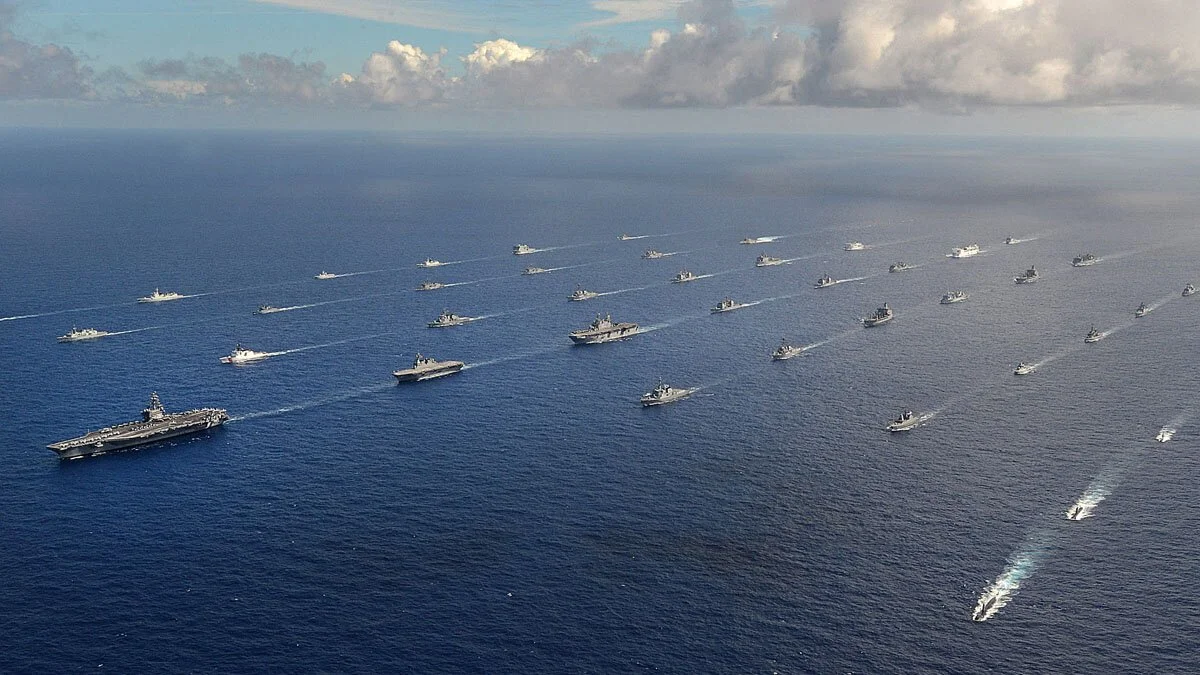
This colossal spending has financed a global empire, including 440 domestic military bases, 750 military bases in eighty countries, 2.5 million American soldiers, mercenary soldiers in “privatized military firms,” spies, and military and civilian technicians, teachers, and other personnel; eleven carrier battle groups over the world’s seas; and environmentally disastrous infrastructure like military golf courses and oil consumption exceeding that of 170 nations.
What it hasn’t bought is peace.
Indeed, the U.S. is presently funding proxy wars in Ukraine and Israel and is gearing up for an arms race with China. Nuclear rearmament, hypersonic missiles, satellite warfare, cyberspace, robotic and drone warfare, naval and air supremacy – these are the threats to the United States and the world order that the Pentagon is now promising are upon us and for which many trillions of dollars must be allocated in the coming years.
Human and Environmental Toll: The Post 9/11 Wars
The U.S.-led wars since 2001 have claimed nearly million lives (most of them civilians), displaced 38 million and 60 million people, and left countries like Iraq and Afghanistan in perpetual crises of hunger and instability. In Iraq, five million people faced moderate to severe food insecurity. Afghanistan remains plagued by famine and malnutrition.
Additionally, not included in the statistics are the many millions of people who have suffered – often lifelong – physical and mental disabilities and trauma from the horrors and madness of war.
The environmental consequences are equally staggering. Military operations are among the largest contributors to greenhouse gas emissions, while bombed ecosystems—forests, wetlands, and farmland—may take many decades to recover. The irony is tragic: the U.S. military, created to defend the nation, has become one of the world’s greatest threats to global sustainability.
The Empire Strikes Back: The Costs of Global Hegemony
After the collapse of the Soviet Union in 1991, the United States emerged as the world’s sole superpower. With this unchallenged dominance came the ability to act with impunity:
Ignoring international law, such as the 1989 invasion of Panama.
Refusing to sign arms treaties, like the Comprehensive Nuclear-Test-Ban Treaty.
Overthrowing democratically elected leaders in Iran, Guatemala, and Chile.
Supporting despotic regimes, from Augusto Pinochet in Chile to Mohammad Rezu “The Shah” Pahlavi in Iran and Saddam Hussein in Iraq.
Far from ensuring global stability, these actions have entrenched cycles of violence, poverty, hunger, and ecological collapse. The very values of democracy and human rights that America claims to uphold are undermined by these imperial practices.
What is Ours to Do
Military spending consumes an unsustainable thirty-six percent of the U.S. federal budget, diverting resources away from critical needs like education, healthcare, and renewable energy. The moral and financial costs are staggering, but they pale in comparison to the opportunity cost: the chance to build a world driven by peace and sustainability.
Awareness is the first step. Only by understanding the systemic nature of the problem can we begin to change it.
That step itself can be a big challenge. We know that there are powerful forces arrayed against even an awareness of our circumstances. By funding war through debt, politicians have distanced American citizens from the financial sacrifice that usually comes with military ventures. And by carrying out military operations covertly and eluding the scrutiny of journalists, the Pentagon prevents citizens from knowing the profound scale of violence committed in our country’s name.
Once we do become aware of our unwitting complicity, then what can we do? The answers given usually focus on voting, communicating with one’s representatives in Congress, and getting politically engaged, either by joining organizations like World Beyond War or becoming active in local politics.
Political engagement will eventually be essential but, face it, relatively few people have the passion, time, and resilience needed to be an activist. For most people, trying to affect change towards a peaceful, equitable, and sustainable world can feel quixotic if not completely hopeless.
So, for those who feel such skepticism and yet are disinclined to nihilism, I suggest affecting change in one’s sphere one small encounter after another. One can follow the 18th century philosopher Emmanual Kant’s concept of the categorical imperative. Behave in ways that you feel are so morally right that you believe all people should do the same. By embracing empathy, justice, and nonviolence in our actions, we can ripple those values outward.
When the moral choices of millions are so aligned they can have enormous power.
True security does not come from bombs and bases. It comes from fostering global equity, addressing climate change, and ensuring that every human being has access to the basic necessities of life. This is the fight worth funding.
Endnotes related to military funding outside the DoD:
[1] For a little more about how these values were determined see the following.
Included is more than $176 billion that went to Homeland Security; $76.5 billion for the National Intelligence Program, which includes the CIA and NSA; $406 billion went to the Department of Veteran’s Affairs and related programs. The Military Retirement Fund (MRF) – which pays benefits for retired military in the Department of Defense – came to about $171 billion. The U.S. government pays an additional $40 billion, minimum, to retired DoD civilian personnel for social security and Medicare payments. About 32.6 billion of the Department of Energy’s budget goes into nuclear modernization, stockpiling, and cleanup as well as other military activities. Of the $174.8 billion allocated to Ukraine for 2023 and 2024, $117.4 billion was for military purposes, which comes to $59 billion per year. Then, there is the estimated fourteen percent of the Foreign Affairs budget that is used each year for military aid and other military-related operations. For 2024 that came to almost $9 billion.
Finally, it has been estimated that at least two-thirds of the U.S. federal debt (accumulated since 1916 “when the debt was nearly zero”) is attributable to defense spending. According to the U.S. Government Accountability Office, the interest on government debt ($35.5 trillion in 2024) was $909 billion. That makes the portion of the debt payments due for military purposes $606 billion in that year, alone.
As of 2022, the total financial cost of post 9/11 wars to the United States government has been estimated to be eight trillion dollars. More than a trillion of that has been for interest payments already accrued. The post 9/11 wars were financed completely by borrowing. As long as the debt remains outstanding, we must continue paying lenders the interest on their loans, forty percent of which go to foreign banks and to foreign countries that have bought U.S. treasury bonds. And, as long as the federal budget is greater than its revenues, the principle will not be paid. Rather, more debt will accumulate.