The Noble Qualities of Psychedelics
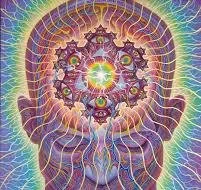
Psychedelics as Catalysts for Change, Part II of V (Photo: The Seer by Alex Grey)
Much like the power of meditation, psychedelics boast an impressive list of purported benefits.
From laboratory research, psychedelics have been have credited for helping to overcome depression and anxiety; increasing self-confidence, self-contentment, and an over-all sense of well-being; decreasing the recidivism of criminality, substance abuse, and alcoholism; managing post-traumatic disorder; improving close relationships; “bringing repressed childhood memories to the surface;” and otherwise facilitating the therapeutic process.
At Harvard University, John Halpern has found that LSD can actually cure the previously incurable and horrific effects of cluster headaches. And in their book, The Human Encounter with Death, psychiatrist Stan Grof and anthropologist Joan Halifax described both the analgesic and the psycho-spiritual effects of the psychedelic LSD on terminally ill patients dying of cancer.
It was the psycho-spiritual benefits that most impressed these researchers. The mystical-type experiences while under the influence of the psychedelic reassured their end-state patients and helped to relieve the great anxiety and fear associated with death. Many patients also experienced remarkable relief from physical pain. Grof and Hallifax supposed that this physical relief was perhaps principally more a result of the psycho-spiritual transformations than any chemically-activated analgesic.
Roland Griffiths and his colleagues at John Hopkins University had similar results with psilocybin in relieving depression in cancer patients. Given that the fear and certitude of death is likely the single most extreme and difficult existential process that each and every person must face, these results in comforting and encouraging the dying speak strongly of the possible value of psychedelics and of their potential role in society.
Perhaps psychedelic’s greatest potential contribution to humanity, at least with respect to our collective self-destructive relationship with Nature, has to do explicitly with their role in the raising of human consciousness. In the past sixty or so years, at a time when media documentation has been increasingly ubiquitous and difficult to erase by either conservative institutions or by the winds of time, many voices have consistently corroborated a psychedelic worldview that mirrors the language of the mystics—of a sense of unity with the entire universe, a deep unconditional love, identification and compassion with all life, and an indescribable joy, comfort, and peace with one’s own life.
Jack Kornfield, one of the most influential Buddhist teachers in the United States, has spoken candidly of his experiences with psychedelics. He says, “They certainly were powerful for me. I took LSD and other psychedelics at Dartmouth though I was studying Eastern thought even before then, but they came hand-in-hand as they did for many people. It is true for the majority of American Buddhist teachers that they had experience with psychedelics either right after they started their spiritual practice or prior to it.”
Similarly, some of the most important contributors to the recent ecological and spiritual worldview have testified to the role of psychedelics in their personal transformation and in the transformational possibilities for others, including Aldous Huxley, novelist and social critic; Arne Naess, early philosopher of the deep ecology movement; Steward Brand, editor of the Whole Earth Catalogue; and Bill Wilson, co-founder of Alcoholics Anonymous, whose twelve steps stand as perhaps America’s greatest original contribution to spiritual practice.[i]
And many people, including those as different from each other as Huston Smith and Steve Jobs, have ranked psychedelic experiences as profound and “one of the most important things in my life.”[ii] No other modality of healing can boast of such extraordinary results in such a short time.
However powerful they may be, the very nature of psychedelics might currently prevent them from serving as reliable catalysts for the deep, transformative change needed to move humanity beyond its current self-centered and environmentally destructive ways.
Their main problem lies precisely in their great power. The very neurotransmitters that can mediate life-changing mystical experiences within hours of ingestion can have all sorts of other effects in the person having the experience as well as in the society at large. This yin and yang quality of psychedelics will be dealt with in the following two posts.
[i] Bill Wilson—Alcoholics Anonymous World Services (1984:368-377).
[ii] Quote from Bosker, B. (2011, Dec 21) The Steve Jobs Reading List: The Books and Artists that Made the Man. Huffington Post, which is similar to in an interview with Steve Jobs by Markoff, J (2005:xix)What the Dormouse Said: How the 60s Counterculture Shaped the Personal Computer. Viking, New York.